Scientific Research & Monitoring
STUDIES IN NATURE
At HADCO Experiences, we are custodians of two ecologically significant landscapes that represent the living biodiversity of Trinidad and Tobago.Our environmental approach is founded on collaborative research, field monitoring, and conservation management, guided by scientific integrity and a commitment to education & outreach.
Through verified on-site programs and partnerships, we document, monitor, and restore the ecosystems entrusted to our care – ensuring that the species, habitats, and natural processes within these protected areas continue to thrive for generations to come.
Below, you’ll find more information to enhance your understanding of and appreciation for our native flora and fauna.
Biodiversity Briefs
Acoustic monitoring of the Bearded Bellbird (Procnias averano) focuses on recording and analysing its distinctive calls to better understand vocal behavior, call structure, and ecological role within the forest soundscape.
These recordings contribute to site-based ecological monitoring that helps evaluate how habitat conditions influence the bellbird’s presence and calling activity.
Working closely with researchers from around the globe, our team has contributed to research on the ways in which low-oxygen levels in nests impact sea turtle’s embryonic development. By working to identify factors that inhibit the growth of our native Leatherback turtle population, we hope to serve as stewards of their growth and development. We have also supported regional research into bycatch reduction methods, including the use of circle hooks and Turtle Excluder Devices, in order to protect our local populations.
You might enjoy this BBC feature video on Trinidad’s turtle conservation efforts.
We are documenting and classifying the vast range of flora and fauna that inhabit our reserves. From identifying native plant species to recording elusive wildlife sightings, our mapping efforts provide a living record of our evolving ecosystems, helping identify moments when intervention is needed, or when stepping back and removing human obstacles will be key to preserving these treasures for generations to come. Currently, we are working on recording mammal activity (ocelot, agouti, armadillo, red-rumped agouti) to assess forest corridor connectivity; documenting pollinator diversity and life cycles in the gardens surrounding the Nature Centre and building a butterfly breeding box; monitoring coastal and marine-associated bird species, nesting turtles, and the surrounding rainforest-edge biodiversity; and developing a rejuvenated agroforestry and rewilding program that integrates shade-grown cacao, fruiting and native trees to support habitat recovery and enhance biodiversity corridors.
The Oilbird (Steatornis caripensis) colony at Dunston Cave (Guacharo cave) represents one of the most unique natural assets within HADCO Experiences’ care. A rare nocturnal frugivore, oilbirds are one of the most fascinating residents of our habitat. Long-term monitoring involves observation of presence, breeding cycles, feeding behaviour, and population trends to support the species’ protection and the maintenance of healthy cave ecosystems.
Right now, research development is underway to evaluate GPS-tagging feasibility so we can track foraging ranges and roosting ecology, helping the treasured population survive and thrive on our grounds. This program contributes valuable data to the understanding of a globally rare nocturnal frugivore that plays an essential role in rainforest seed dispersal.
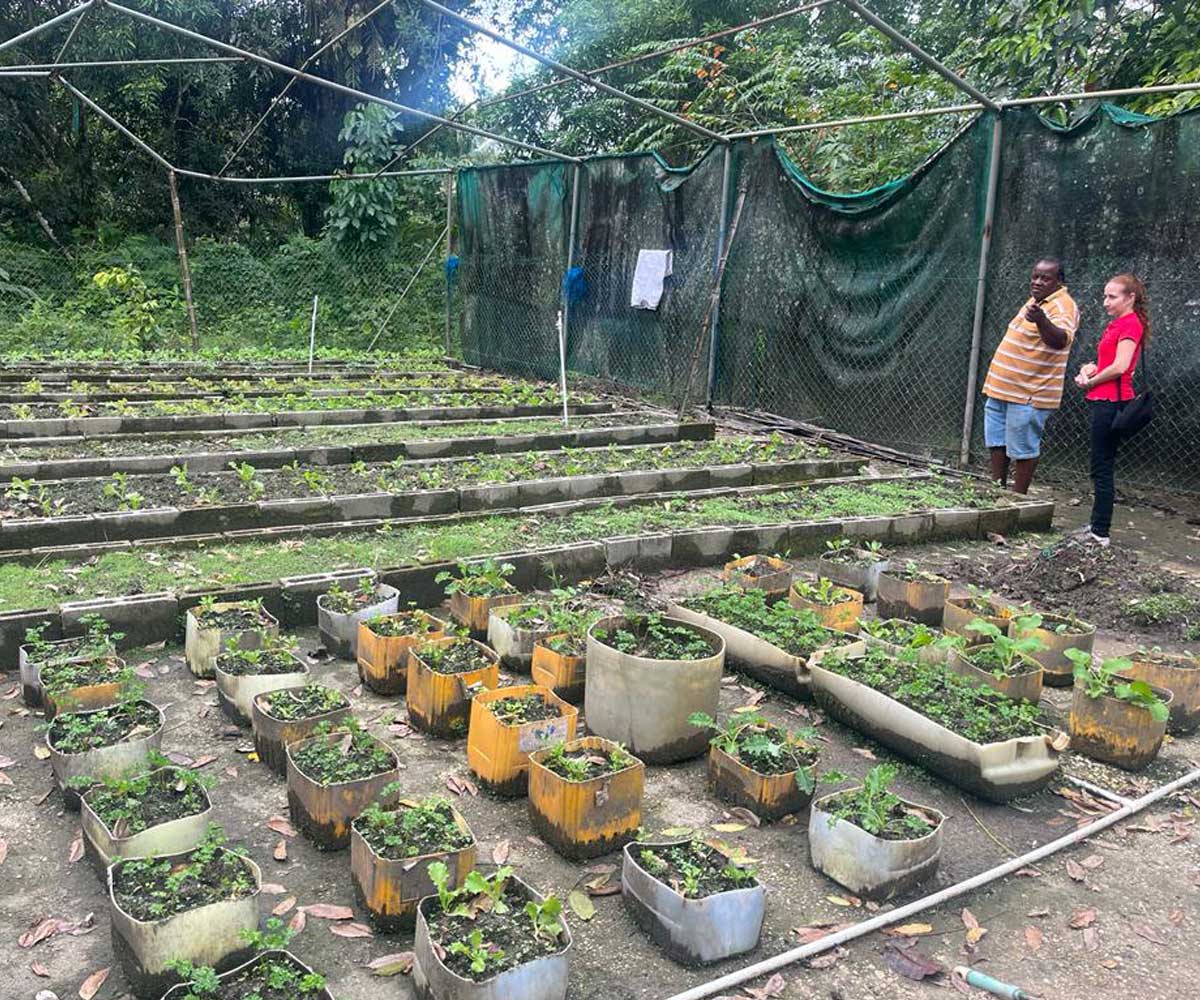
At Asa Wright Nature Centre, the on-site greenhouse operates as a sustainable food hub, producing greens and vegetables that supply the lodge kitchen. Beyond food security, this programme embodies principles of circular resource use and local resilience – integrating biodiversity enrichment through soil management, composting, and pollinator-friendly cultivation practices that complement surrounding forest ecosystems.
Camera traps positioned across HADCO Experiences’ forested properties provide an ongoing record of wildlife presence and behaviour. These devices assist in documenting key species such as the ocelot (Leopardus pardalis) helping assess habitat use and movement patterns within the protected areas. Data gathered through this monitoring guide management decisions and contribute to the broader understanding of Trinidad’s terrestrial fauna.
Explore & Learn
All research and monitoring adhere to principles of collaboration, and ecological integrity. We are proud to maintain partnerships with many local and international organizations in our quest to study and conserve our precious natural resources. Fieldwork is carried out under appropriate permits and ethical standards, ensuring that each activity contributes to species protection and habitat resilience.
We continue to engage with organizations dedicated to biodiversity and conservation, including:
Turtle Village Trust & Grande Riviere Nature Tour Guides Association: